
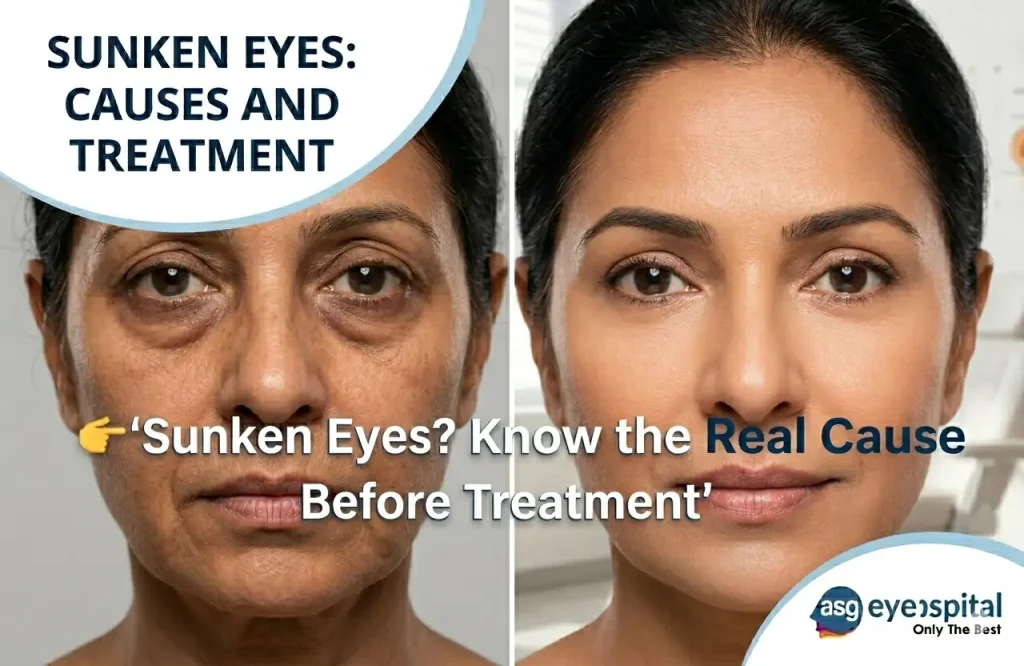
Sunken eyes – the hollowed, shadowed appearance beneath and around the orbital area – are one of the most common cosmetic concerns seen at eye clinics. They make the face look older and more tired, even when the person feels fine. The hollowness can involve the under-eye area, the upper eyelid sulcus, or both.
Understanding what causes hollow eyes matters because the treatment depends entirely on the cause. Dehydration responds to water. Age-related fat loss responds to fillers. Anaemia responds to iron. Getting the diagnosis right is what determines whether a treatment works.
What Sunken Eyes Actually Are
The youthful periorbital region has soft tissue fullness that smooths the transition between the eyelid and cheek. With age – or in some conditions earlier – the fat pads reduce. The orbital bones become more visible as bone remodelling enlarges the orbital cavity. Skin thins. The result is a hollowed, shadowed appearance that reflects less light.
Under-eye hollowness is anatomically distinct from dark circles, though the two frequently coexist. Dark circles are primarily a discolouration or shadow of the skin. Hollowness is a structural depression. Both have different primary causes and may need different treatments.
Sunken Eyes Cause: From the Everyday to the Medical
Sunken eyes causes span a wide range, from the temporary and reversible to the structural and progressive. The most common include:
- Ageing – the most frequent cause. Progressive loss of orbital and periorbital fat begins in the third decade and accelerates from the forties onward. The orbital cavity itself enlarges with age, and soft tissue descent reduces the support around the eye, producing deep superior sulci and under-eye hollowness.
- Dehydration – inadequate fluid intake reduces the water content of the periorbital soft tissue, making the area beneath the eye appear more sunken. This is one of the few causes of hollow eyes that is rapidly reversible.
- Weight loss – significant or rapid weight loss reduces facial fat disproportionately, including the orbital and periorbital fat pads. The eyes can appear suddenly more hollow after a period of significant calorie restriction.
- Anaemia and nutritional deficiencies – iron deficiency anaemia produces pallor in the periorbital skin, making shadows under the eye more visible and the area appear more hollow. Low vitamin C and vitamin K also affect skin quality and microcirculation around the eye.
- Chronic sleep deprivation – poor or inadequate sleep reduces skin thickness, increases fluid shifts under the eye, and decreases the opacity of periorbital skin, all of which worsen the appearance of sunken eyes.
- Genetics – tear trough anatomy and orbital fat distribution are partly hereditary. Some people have prominent orbital rims and reduced periorbital fat from a young age, producing the hollow eyes appearance without any systemic cause.
- Medication side effects – prostaglandin analogue eye drops used for glaucoma are a documented and clinically significant cause of periorbital fat atrophy, producing unilateral or bilateral sunken eyes over months to years of use.
Can sunken eyes be a sign of something medically serious?
Occasionally, yes. Severe dehydration, advanced malnutrition, and certain autoimmune or inflammatory conditions, including scleroderma and Parry-Romberg syndrome, can produce periorbital hollowing. New-onset, rapidly progressive, or unilateral sunken eyes in an adult warrant evaluation to exclude these causes.
How To Improve Sunken Eyes Naturally
For lifestyle-related causes, several measures produce genuine improvement:
- Hydration – consistently drinking adequate water is the most direct intervention for dehydration-related hollowness. The standard recommendation is 8 to 10 glasses of water daily, adjusted for body weight and activity level.
- Sleep – seven to eight hours of quality sleep allows the periorbital tissue to recover. Sleep position also matters: sleeping on the back reduces fluid pooling under the eyes.
- Nutrition – iron-rich foods (lentils, spinach, red meat, fortified cereals) address anaemia-related dark circles and pallor. Vitamin C-rich foods support collagen synthesis in the periorbital skin. Foods high in vitamin K (green leafy vegetables) reduce the visibility of microvasculature.
- Cold compress – reduces puffiness and temporarily constricts blood vessels, improving the appearance of both dark circles causes and hollowness. Most effective in the morning.
- Limiting alcohol and caffeine – both dehydrate the periorbital tissue and worsen the appearance of hollow eyes over time.
Also read: What Happens When Shingles Spreads to Your Eyes?
Medical Sunken Eyes Treatment Options
When the cause is structural, age-related orbital fat loss, genetics, or significant weight reduction, natural remedies address the surface but do not restore volume. Medical treatment options for sunken eyes include:
Dermal fillers: hyaluronic acid-based fillers injected into the tear trough and periorbital area restore volume and smooth the eyelid-cheek transition. This is the most widely used and most reversible medical treatment for under-eye hollowness. Results typically last 12 to 18 months. The technique requires anatomical expertise, given the thin skin and complex vascular anatomy of the area.
Platelet-rich plasma (PRP): injections of the patient’s own platelet-rich plasma into the under-eye area stimulate collagen production and improve skin quality, reducing the shadow effect. PRP produces more modest volume improvement than fillers but can improve skin texture and tone.
Fat grafting: Autologous fat transferred from elsewhere in the body provides a permanent volume restoration. It is more involved than fillers and carries a higher recovery burden, but is preferred for patients seeking a longer-term structural solution.
Medication review: for patients on prostaglandin analogue eye drops where unilateral periorbital hollowing has developed, switching to an alternative glaucoma medication under specialist guidance can partially or fully reverse the fat atrophy over months.
Final Thoughts on Hollow Eyes and Treatment
Sunken eyes are common and, in most cases, manageable. The appropriate response depends on understanding the cause: natural measures work for lifestyle-driven hollowness; structural volume loss needs structural treatment. Treating dark circles causes and hollowness together, when both are present, produces the most complete improvement.
ASG Eye Hospital, with centres in Lucknow, Varanasi, Kanpur, and more, provides oculoplastic consultations for patients concerned about periorbital appearance. Whether the cause is age-related fat loss, medication side effects, or a systemic condition, the evaluation identifies the driver and guides the most appropriate treatment.
FAQs
1. What are the most common sunken eyes causes?
Ageing and the associated loss of orbital fat are the most common causes. Dehydration, weight loss, poor sleep, anaemia, nutritional deficiency, and genetics are also frequent contributors. Prostaglandin analogue eye drops used for glaucoma are a recognised medical cause of periorbital hollowing.
2. Can sunken eyes be reversed naturally?
When the cause is dehydration, poor sleep, or nutritional deficiency, yes – correcting these factors produces real improvement. Age-related structural fat loss cannot be reversed with lifestyle changes alone and requires a volume-restoring treatment such as fillers or fat grafting.
3. What is the difference between sunken eyes and dark circles?
Sunken eyes are a structural depression caused by fat loss and orbital changes. Dark circles are a discolouration or shadowing of the under-eye skin. Both can occur together, but they have different causes and may need different treatments.
4. How long do filler results last for under eye hollowness?
Hyaluronic acid fillers in the tear trough and periorbital area typically last 12 to 18 months. Longevity varies based on the specific filler used, the volume injected, and the individual’s metabolism.
5. Should I see a doctor for sunken eyes?
If the hollowness appeared recently, is progressive, or is unilateral (affecting one eye significantly more than the other), a clinical evaluation is appropriate to rule out an underlying cause. Long-standing, bilateral, age-related hollowness with no other symptoms does not require urgent assessment.