
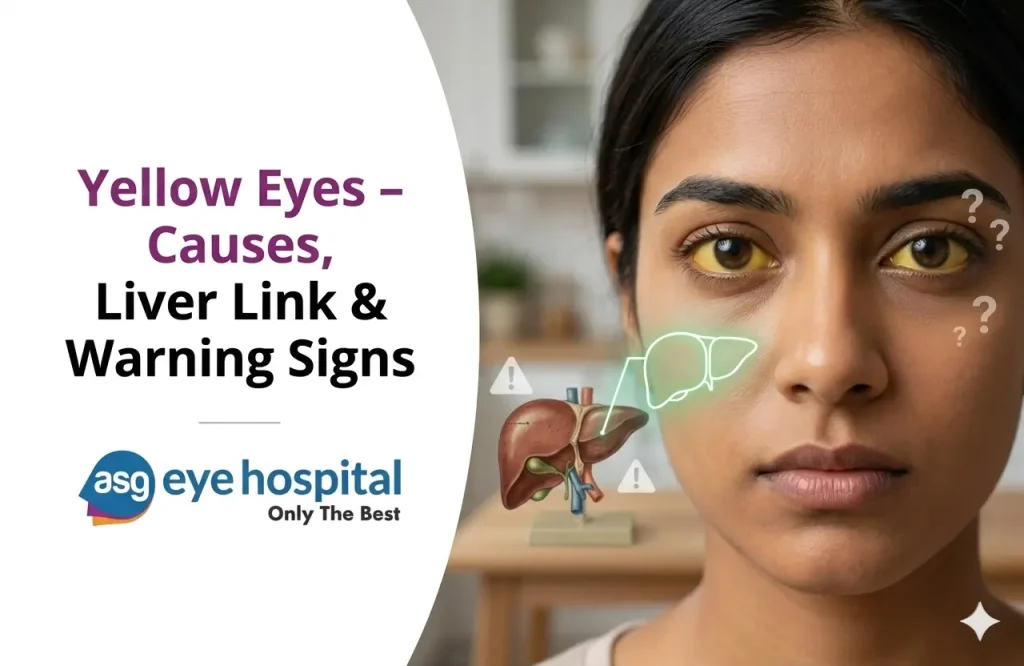
Redness in the eyes is familiar enough that most people have a ready explanation for it. Yellow eye is different. When the whites of the eyes take on a yellow or amber tint, it registers as something more unfamiliar, and for good reason.
Yellow discolouration in the whites of the eyes is rarely a standalone eye condition. It is almost always a sign that something else is happening in the body, and in many cases, the liver is involved. Understanding what is behind the yellow eyes, and how to differentiate a minor and serious cause.
Yellow eyes causes and what is happening in the body
The white part of the eye, the sclera, is normally close to white or very slightly off-white. When it turns yellow, the medical term is scleral icterus. The yellow sclera’s meaning is straightforward: bilirubin, a yellow pigment produced when red blood cells break down, has accumulated in the blood and is deposited in body tissues, including the sclera. The eyes tend to show this early because the sclera has a high affinity for bilirubin.
The most common yellow eyes causes:
- Jaundice – itself a symptom of an underlying condition, not a diagnosis
- Liver disease – hepatitis, cirrhosis, or fatty liver, impairing bilirubin clearance
- Bile duct obstruction – gallstones or tumours blocking bile flow from the liver
- Haemolytic anaemia – red blood cells breaking down faster than normal, producing excess bilirubin
- Certain medications – some drugs cause liver stress or interfere with bilirubin processing
- Leptospirosis – a bacterial infection common in tropical climates, including parts of India
Pinguecula, a yellowish growth on the conjunctiva, can create a localised yellow appearance, usually on the nasal side of the eye. This is unrelated to bilirubin and is generally harmless.
Also read: Can High Blood Pressure Cause Your Vision Problems?
Why are my eyes yellow: recognising jaundice eyes symptoms
Why are my eyes yellow? It is a question most people ask only after someone else notices the change. The shift can happen gradually enough that it is not obvious in a familiar mirror.
Jaundice eyes symptoms extend beyond the sclera. As bilirubin rises, the skin typically yellows as well. Dark or tea-coloured urine appears because excess bilirubin is excreted through the kidneys. Pale stools, itching without a rash, fatigue, and nausea often accompany the visible yellowing.
Can eyes look slightly yellow without being a serious problem?
Yes, lighting conditions and screen colour temperature can make the whites appear more yellow than they are. A mild yellowish tint near the inner corner is also common in older adults and is usually benign. Any genuine yellowing of the sclera that appeared recently needs assessment, not assumption.
Liver disease, yellow eyes and the connection to understand
The liver processes bilirubin and clears it from the bloodstream into bile. When the liver is inflamed, scarred, or functioning poorly, that clearance slows. Bilirubin accumulates, enters tissues, and the sclera – one of the most visible sites – yellows. Liver disease yellow eyes is one of the earliest and most visible signs of hepatic compromise.
In India, hepatitis A and E are common causes of acute jaundice, particularly linked to contaminated water during the monsoon season. Hepatitis B affects an estimated 40 million people in the country and can present with yellow eyes as part of the initial or recurrent symptom picture. In cirrhosis, which develops slowly over years, yellow eyes may appear alongside other signs that liver function has significantly declined.
If the yellow colour fades from the eye, does that mean the liver has recovered?
No. Visible jaundice can resolve while the underlying liver condition persists. A liver function test is the only reliable way to confirm recovery, not the appearance of the eye.
How to treat yellow eyes: where the starting point actually is
How to treat yellow eyes starts with identifying the underlying cause. Yellow eyes are an indicator of something systemic; there is no topical or eye-specific treatment for scleral yellowing caused by elevated bilirubin.
- For jaundice from viral infection: rest, hydration, avoidance of alcohol, and liver function monitoring.
- For bile duct obstruction, the blockage needs to be addressed medically or surgically.
- For haemolytic anaemia, treatment targets the abnormal cell breakdown.
- For medication-related liver stress, the drug is reviewed under medical supervision.
- For pinguecula: observation is usually adequate, with a simple procedure available if it becomes cosmetically significant or symptomatic.
Warning signs that yellow eyes need immediate attention
Not all yellow eyes carry the same urgency. Long-standing, mild yellowing with a known benign cause is different from new yellowing that appeared over a matter of days.
Seek prompt medical attention if yellow eyes appear alongside:
- Dark or tea-coloured urine appearing around the same time
- Pale, clay-coloured, or greasy stools
- Significant fatigue or unexplained weight loss
- Upper right abdominal pain or tenderness
- Fever, nausea, or vomiting
- Itching across the body without a visible cause
Confusion or changes in mental clarity – these can indicate advanced liver compromise
Yellow eyes in a newborn are a separate category. Neonatal jaundice is common in the first days of life and is usually managed with phototherapy. Jaundice appearing within the first 24 hours or persisting beyond two weeks needs prompt paediatric evaluation.
Yellow sclera’s meaning in the context of an eye examination
When someone presents with yellowed whites at an eye clinic, the examination has a specific purpose: to determine whether the yellowing is a localised conjunctival change or a sign of systemic bilirubin elevation. A slit-lamp examination allows the specialist to differentiate true scleral icterus, which spreads across the white, from localised findings like pinguecula or subconjunctival fat deposits. The yellow sclera’s meaning in a clinical context is almost always a prompt for systemic investigation: liver function tests, a full blood count, and, in some cases, imaging.
The role of the eye specialist is to identify what is present and direct the patient toward the right investigations. At ASG Eye Hospital, yellow eye presentations are taken seriously from the first visit, and patients leave with a clear understanding of what the finding means and what the next steps should be.
Final thoughts on yellow eyes causes and when to act
Yellow eyes are one of the clearer signals the body sends when something needs attention. Unlike many eye symptoms that come and go, yellowing of the sclera almost always points toward something systemic worth investigating.
ASG Eye Hospital, with centres in Mumbai, Varanasi, Surat, Rajasthan, Delhi, Pune, Jaipur, and more, sees presentations where an eye symptom is the first visible indicator of a broader health concern. The examination provides clarity on whether what is present needs eye-specific care, systemic investigation, or both.
Yellow eyes are not something to observe and wait on. They are a prompt to find out what is behind them.
FAQs
1. What are the most common yellow eyes causes?
Jaundice from liver disease, bile duct obstruction, haemolytic anaemia, and infections like hepatitis or leptospirosis are the most frequent. Pinguecula – a localised conjunctival growth – can cause yellowing in one area and is usually benign.
2. Are yellow eyes always linked to liver disease?
No – haemolytic anaemia and bile duct blockage can also cause yellow eyes. That said, liver involvement is the most common cause and should always be included in the investigation.
3. What do jaundice eyes symptoms look like?
The whites take on a yellow or amber tint across the whole sclera, not just one spot. This is typically accompanied by dark urine, pale stools, and sometimes skin yellowing, fatigue, or itching.
4. Can yellow eyes be treated at home?
No. Yellow eyes from elevated bilirubin require medical investigation to find and treat the underlying cause. There is no home remedy for the systemic conditions driving the yellowing.
5. When should I see a doctor for yellow eyes?
Promptly. Any new yellowing of the sclera, especially alongside dark urine, fatigue, or abdominal discomfort – needs medical evaluation without delay.