A child’s visual system is not fully mature at birth. It develops through infancy, continues through primary school, and reaches functional maturity around seven to ten years. Structural development, particularly axial length, continues through the teens. Throughout this window, nutrition plays a direct role in how well the visual system develops and how protected it is from conditions that can compromise it.
This is not about supplements or superfoods. It is about a consistent, varied diet that provides the specific nutrients the growing eye requires. Most of them come from foods that are accessible, affordable, and already familiar in the Indian kitchen.
Why nutrition matters specifically for children’s eye development
The eye has some of the highest metabolic demands of any tissue. The retina requires a continuous supply of specific nutrients to function, maintain its photoreceptors, and support the macular pigment that protects central vision. In a developing child, these requirements are compounded by the active growth of ocular structures.
Deficiencies in key nutrients during childhood do not produce immediate, dramatic symptoms, they accumulate quietly. Vitamin A deficiency is the leading preventable cause of childhood blindness worldwide, but the earlier stage, night blindness and reduced contrast sensitivity, often goes unnoticed. Inadequate lutein and zeaxanthin during the years when macular pigment is being laid down may not cause visible harm for decades, but leaves the foundation less protective than it should be.
Vitamin A: the non-negotiable foundation
Vitamin A is essential for rhodopsin production, the photopigment in rod cells that enables low-light vision, and for the integrity of the conjunctival and corneal epithelium. Without adequate vitamin A, these surfaces dry and keratinise, and the retina loses its ability to adapt to darkness. This is the most clinically significant nutritional risk to a child’s vision and remains common in many parts of India.
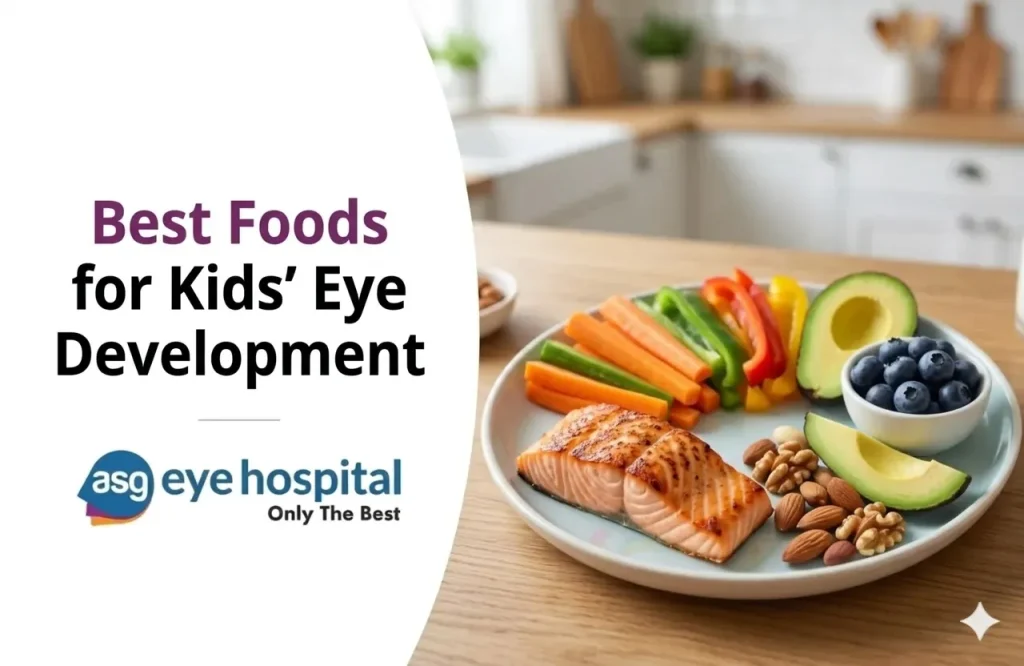
Best foods for kids’ eye health supplying vitamin A include sweet potato, carrots, pumpkin, mango, papaya, dark leafy greens, eggs, and dairy. Plant sources supply beta-carotene, which the body converts to vitamin A. Animal sources supply preformed retinol, which is more directly available. A mixed diet covering both is ideal.
Lutein and zeaxanthin: building the macula’s protection
Lutein and zeaxanthin accumulate specifically in the macula, the central retina responsible for sharp, detailed vision. They filter high-energy blue light before it reaches the photoreceptors and act as antioxidants in the most metabolically active tissue of the eye. Unlike most nutrients, the body cannot synthesise them; they must come entirely from food.
Eye development foods for children rich in lutein and zeaxanthin include spinach, kale, peas, broccoli, corn, and eggs. Eggs are particularly valuable because the yolk contains both compounds in a highly bioavailable form – the fat content enhances absorption. Spinach and dark greens are the richest plant sources. One egg or a daily portion of dark greens provides meaningful amounts for a growing child.
Also read: Eye Care Tips for Kids & Adults: Daily Routine for Healthy Vision
Omega-3 fatty acids: retinal structure and tear film quality
The retina has one of the highest concentrations of DHA in the body. DHA is a structural component of photoreceptor cell membranes and is essential for the signalling processes that translate light into visual information. During the first years of life, adequate DHA intake is critical for retinal maturation. It remains important throughout childhood as the retina continues to develop.
The best sources of omega-3 for children are oily fish – salmon, sardines, mackerel – which provide DHA directly. For children who do not eat fish, walnuts, flaxseed, and chia seeds provide Alpha-Lipoic Acid (ALA), which the body partially converts to DHA, though the conversion is inefficient. Omega-3 also supports the tear film lipid layer, reducing dry eye in children who spend significant time on screens.
Zinc: the transport mineral for vitamin A
Zinc has a less visible profile in eye health discussions than vitamins A or C, but its role is specific. The retina and choroid contain the highest zinc concentrations in the body. Zinc is required to transport vitamin A from the liver to the retina, where it is converted into the protective pigment needed for vision. Without adequate zinc, even a sufficient vitamin A intake is less effective.
Nutrition for kids’ eye growth that includes zinc comes from pulses (lentils, chickpeas, rajma), pumpkin seeds, whole grains, eggs, dairy, and lean meat. Most Indian children eating a varied diet with adequate pulses and dairy will meet zinc requirements without supplementation.
Vitamins C and E: antioxidant protection for the lens and retina
The lens is avascular, it receives no direct blood supply and relies entirely on diffusion for its antioxidant supply. Vitamins C and E protect the lens proteins from oxidative stress. While age-related cataract is an adult disease, the lens is exposed to oxidative load from childhood, and early nutritional patterns influence its long-term transparency.
Vitamins for children eye health in this category: amla (Indian gooseberry) has one of the highest vitamin C concentrations of any food and is widely available across India; guava, citrus fruits, tomatoes, and capsicum also provide vitamin C; sunflower seeds, almonds, and edible oils supply vitamin E. Amla in any form – raw, dried, or as juice – is an exceptionally practical source for Indian children.
Putting it together: a healthy diet for kids’ vision in practice
A healthy diet for kids’ vision does not require special foods or supplements for most children. It requires variety. A child eating across the following groups daily will typically meet the nutritional requirements for good eye development:
- At least one orange or yellow vegetable daily – carrot, sweet potato, pumpkin, or mango – for beta-carotene
- Dark leafy greens three to four times per week – spinach, methi, kale – for lutein, zeaxanthin, and folate
- Eggs regularly, for lutein, zeaxanthin, vitamin A, and zinc in bioavailable form
- Oily fish once or twice per week, if included in the diet, or walnuts and flaxseed regularly for omega-3
- Pulses and legumes daily – dal, rajma, chhole – for zinc and protein
- Amla, guava, or citrus daily for vitamin C
- Adequate dairy for vitamin A, zinc, and calcium
Does a vegetarian Indian diet provide enough nutrition for a child’s eyes?
Yes, with attention to variety. Dairy, eggs if eaten, dark leafy greens, pulses, orange vegetables, and amla together cover the major requirements. The one gap in a strictly plant-based diet is DHA omega-3, which plant sources supply less efficiently. A paediatric ophthalmologist or nutritionist can advise on supplementation if the child’s diet is restricted.
Final thoughts on nutrition for kids’ eye growth
Foods to improve eyesight in kids are not exotic or expensive. They are the foods Indian families have been eating for generations: dal, palak, carrot, amla, eggs, and oily fish. What matters is consistency and variety across the years when the visual system is most actively developing.
ASG Eye Hospital, with centres in Varanasi, Kanpur, Amritsar, and more, provides paediatric eye examinations, including assessment for nutritional deficiency signs, refractive error, and myopia management. A child’s first comprehensive eye examination should happen before they start school. If you have concerns about your child’s vision or diet, an appointment with a paediatric ophthalmologist is the right first step.
FAQs
1. What are the best foods for kids’ eye health?
Sweet potato, carrots, eggs, spinach, dark leafy greens, oily fish, amla, pulses, and dairy. Together, these provide vitamin A, lutein, zeaxanthin, DHA omega-3, zinc, and vitamins C and E – the key nutrients for eye development and protection.
2. What vitamins are most important for children’s eye health?
Vitamin A is the most critical – deficiency is the leading preventable cause of childhood blindness. Lutein and zeaxanthin protect the macula. DHA supports retinal structure. Vitamins C and E protect the lens from oxidative damage. Zinc enables vitamin A to reach and function in the retina.
3. Can diet improve eyesight in kids?
Diet supports normal eye development and protects against conditions like night blindness and macular degeneration. It does not reverse established refractive error like myopia – that requires glasses or, in appropriate cases, myopia control treatment.
4. Is a vegetarian diet sufficient for children’s eye nutrition?
Yes, with variety. Dark leafy greens, eggs, dairy, orange vegetables, pulses, and amla cover most requirements. The main consideration is DHA omega-3, which plant sources convert less efficiently. A nutritionist can advise if the diet is restricted.
5. At what age should a child have their eyes checked?
Before starting school, around age four to five, even without any complaints. Earlier if there are concerns about squinting, head tilting, or difficulty with visual tasks. Regular screening continues every one to two years throughout the school years.